


No items found in your cart!
No items found in your cart!
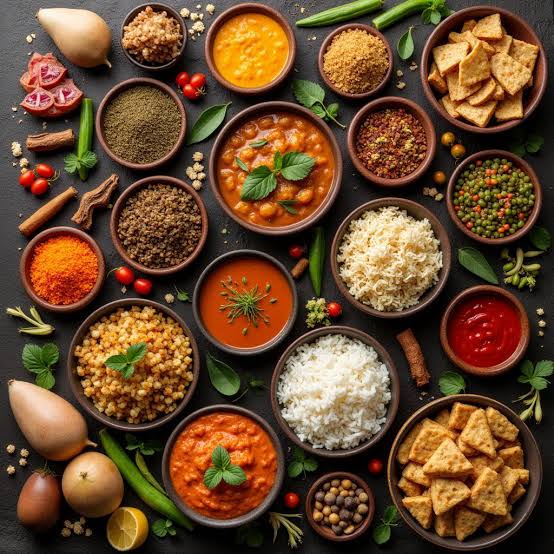
 you definitely can not afford to miss this. READ HERE https://www.food.goglowonline.com/view-post.php?post_id=204, Thanks for always taking out time to read through our blog posts @ Goglow Limited! We are Happy that you enjoy it!&image=<img src='https://www.food.goglowonline.com/upload/1790167195food pic.jpg'/>) |
|
|
|
 you definitely can not afford to miss this. READ HERE https://www.food.goglowonline.com/view-post.php?post_id=204, Thanks for always taking out time to read through our blog posts @ Goglow Limited! We are Happy that you enjoy it!&image=<img src='https://www.food.goglowonline.com/upload/1790167195food pic.jpg'/>) |
|
|
|
Food is more than something we eat when we are hungry.
It can tell the story of where we come from, how our parents raised us, what our communities believe, the environment we live in, and even the journeys our ancestors have taken.
Think about it: someone growing up in Nigeria may be familiar with jollof rice, egusi soup, yam, beans, plantain and garri, while someone raised in Japan may grow up eating rice, miso soup, noodles and seafood as everyday foods. Someone in Mexico may consider tortillas and beans everyday staples, while a person in Italy may grow up surrounded by pasta, bread, tomatoes and olive oil.
None of these food choices happened by accident.
Our diets are shaped by a combination of culture, family, religion, geography, climate, economics, migration, availability and personal experience. The result is an extraordinary diversity of food traditions across the world.
The Food and Agriculture Organization (FAO) notes that agriculture and food traditions are closely connected to cultural identity, landscapes and human behaviour.
So, why do we eat what we eat?
One of the strongest influences on our food choices is culture.
Food traditions are often passed from one generation to another through recipes, celebrations, ceremonies and everyday meals. Over time, particular foods become associated with particular communities and identities.
For many people, food can create a feeling of belonging.
A particular soup can remind someone of home. A festive dish can bring back childhood memories. A familiar spice can instantly transport someone to their hometown.
This is why food is often described as part of cultural heritage. FAO highlights the close relationship between cultural identity, food traditions and the landscapes in which communities have developed.
Consider Nigerian food culture, for example. Different regions have developed distinctive culinary traditions based on locally available ingredients, history and ethnic heritage. Foods such as yam, cassava, plantain, rice, beans, vegetables, fish and various grains have become important parts of everyday diets in different parts of the country.
Even within Nigeria, food preferences can vary significantly from one community to another.
Culture doesn't simply tell us what to eat. It can also influence how, when and with whom we eat.
Before we learn about nutrition from school, social media or health professionals, most of us learn about food from our families.
Parents, grandparents and caregivers introduce children to their first foods. They determine what is regularly available at home and often teach children which foods are considered special, ordinary, healthy or undesirable.
A child who grows up regularly eating vegetables may become comfortable with them. Another child may grow up eating mostly rice, pasta or yam and develop those foods as their comfort meals.
Family traditions can also create powerful emotional connections.
Maybe your mother always prepared a particular meal on Sundays. Perhaps your grandmother had a special recipe that nobody else could reproduce. Maybe birthdays, weddings and Christmas celebrations in your family always included the same dishes.
These experiences can influence food preferences long after childhood.
In other words, sometimes we don't simply eat a food because we like its taste.
We like it because it reminds us of someone.
Where you live has a major influence on what is available to eat.
Geography determines many of the crops that can grow, the animals that can be raised, the fish that can be caught and the foods that can be transported or preserved.
Communities living near oceans and major rivers may traditionally consume more fish and seafood. Areas suitable for rice cultivation may develop rice-based cuisines. Regions where livestock farming is common may have strong traditions involving milk, meat or other animal products.
FAO research on food systems emphasizes the relationship between ecosystems, agriculture and traditional food knowledge. Indigenous communities, for example, have developed food systems adapted to their local environments over generations.
This means that the foods available around us often become the ingredients around which our cuisine develops.
Climate also matters.
Temperature, rainfall and seasonal patterns influence agriculture and therefore food availability.
In tropical environments, people may have access to crops such as cassava, plantain, cocoyam, tropical fruits and various leafy vegetables.
In colder environments, communities historically developed different strategies for obtaining and preserving food, including livestock farming, fishing, fermentation, drying and other preservation methods.
Climate doesn't determine a diet completely, but it creates conditions that influence which foods are practical to grow, harvest, store and consume.
Today, global transportation allows people to eat foods from almost anywhere. However, local climate and agricultural conditions still play an important role in shaping traditional cuisines.
For billions of people, food is also connected to religion.
Religious traditions can influence which foods people eat, which foods they avoid, how animals are prepared and when people fast or feast.
For example, Islamic dietary practices include rules surrounding halal food, while Jewish dietary laws include kosher requirements. Hindu traditions vary widely, with some communities following vegetarian diets and some avoiding particular meats.
Religious fasting can also change eating patterns during specific periods.
Food therefore becomes more than nourishment. It can become part of worship, identity, discipline and community.
Historical research compiled by FAO documents the influence of religious traditions on food selection and eating habits across societies.
Importantly, religious food practices can vary considerably between individuals and communities. There is rarely one single diet that represents everyone within a religion.
People have always moved.
They migrate for work, education, safety, family, trade and many other reasons. And when people move, they often carry their food traditions with them.
This is one reason cities around the world have become incredibly diverse food environments.
A Nigerian living in London can still cook Nigerian food. An Indian family living in Canada can maintain traditional recipes. A Mexican community in the United States can preserve its culinary traditions while adapting to locally available ingredients.
Migration can also create something new.
When food traditions meet, ingredients, techniques and recipes can blend to create new dishes and new food cultures.
FAO describes migration as an important part of modern agrifood systems and notes that migrants and diaspora communities can contribute knowledge, resources and innovation to food systems.
That means today's global food culture is partly the result of millions of people carrying their kitchens with them.
Food preference is not always simply a matter of preference.
Income and food prices influence what people can realistically buy.
A person may understand the importance of eating a diverse diet but still choose certain foods because they are cheaper, more filling or easier to access.
The 2026 State of Food Security and Nutrition in the World highlights the continuing challenge of making healthy diets affordable, reporting that billions of people globally cannot afford a healthy diet.
Economic circumstances can influence:
- Which foods households purchase
- How frequently people eat certain foods
- Whether meals are cooked at home or purchased outside
- The amount of meat, fish, fruit and vegetables consumed
- Reliance on inexpensive staple foods
- Food portion sizes
- Where people shop
This is why conversations about food should consider not only what people want to eat, but also what food is available and affordable to them.
Imagine walking into a supermarket filled with rice, bread, noodles, vegetables, snacks, beverages and prepared foods.
Your choices are influenced by what is available.
The same principle operates at a larger scale.
If a community has abundant access to cassava, cassava-based foods are likely to become important. If seafood is readily available, it may become a major part of the local diet.
Modern transportation has changed this dramatically.
Today, foods can travel thousands of kilometres before reaching consumers. Globalisation has therefore expanded the variety of foods available to many people and has also contributed to similarities in diets across countries.
Your dinner may contain ingredients that originated from several different parts of the world.
Tradition can be incredibly powerful.
A recipe doesn't need to be scientifically designed for people to continue making it. Sometimes it survives simply because generations of people have prepared it before us.
Traditional recipes often preserve knowledge about:
- Local ingredients
- Food preservation
- Cooking techniques
- Seasonal availability
- Community celebrations
- Religious practices
- Family history
Traditional knowledge can be particularly valuable because it often represents generations of adaptation to local environments. FAO notes that Indigenous food systems contain extensive knowledge developed through long-term relationships with ecosystems.
But traditions also evolve.
The food your grandmother prepared may not be exactly the same food you prepare today.
Ingredients change. Cooking equipment changes. People move. New products enter the market. New nutritional knowledge becomes available.
Food culture is therefore both heritage and evolution.
Humans are social eaters.
Our friends, colleagues, partners and communities can influence what we eat.
A person who never drank coffee may start drinking it because everyone at work does. Someone may discover a new restaurant because a friend recommends it. A teenager may try a particular snack because it is popular among their peers.
Social media has amplified this influence.
Food videos, recipes, restaurant reviews, cooking challenges and viral dishes can introduce millions of people to foods they might never have encountered otherwise.
A dish can move from being completely unfamiliar to becoming a global trend in a remarkably short period.
There is another powerful factor: memory.
Food can trigger memories in a way few other things can.
The smell of a particular stew can remind someone of childhood. The taste of a particular snack can bring back memories of school. A Christmas meal can remind an adult of family gatherings from decades ago.
This is one reason "comfort food" is so meaningful.
We aren't necessarily eating only for nutrition.
Sometimes we're eating for connection, familiarity and emotion.
The modern food environment is very different from that of previous generations.
Supermarkets, restaurants, food delivery services, refrigeration, international trade and digital media have made it easier to discover and access foods from other cultures.
A person in Lagos can order food online. Someone in Tokyo can try an African restaurant. A family in New York can purchase ingredients imported from Asia, Africa or Latin America.
Technology has effectively brought different food cultures closer together.
But globalisation can have both positive and challenging effects. It can increase variety and cultural exchange while also contributing to increasingly similar diets and greater consumption of certain processed foods.
The challenge is finding a balance between discovering new foods and preserving valuable local food traditions.
One of the most interesting things about food is how relative the idea of "normal" can be.
What feels completely ordinary to one person may seem unusual to another.
For one family, breakfast might mean bread and eggs.
For another, it might be rice.
Another family might eat porridge, noodles, beans or leftovers from the previous day's meal.
None of these choices exists in isolation.
They developed through a combination of history, geography, culture, family habits, economics and availability.
This is why travelling can be such an interesting food experience.
You aren't simply tasting different recipes.
You're experiencing different histories.
The modern world is creating an interesting paradox.
On one hand, people are becoming increasingly interested in preserving traditional foods.
On the other hand, people are also eating more international foods than ever before.
A Nigerian may enjoy jollof rice for lunch, pizza for dinner and sushi on the weekend.
An American family may prepare tacos, pasta and Asian-inspired dishes in the same week.
Food culture is becoming increasingly interconnected.
This doesn't necessarily mean traditional food is disappearing. In many cases, traditional cuisine is being adapted, reinvented and introduced to new audiences.
Perhaps the most beautiful thing about food is that it can show both our differences and our similarities.
Our ingredients may differ.
Our cooking methods may differ.
Our religious practices may differ.
Our climates may differ.
Our family recipes may differ.
But across cultures, people use food to celebrate, welcome guests, care for loved ones, mark important occasions and create memories.
Food is therefore not just something on a plate.
It is a reflection of people, places, history and relationships.
The Next Time You Eat, Ask Yourself: "Why This Food?"
The next time you sit down for a meal, take a moment to think about it.
Why are you eating this particular food?
Maybe your family introduced it to you.
Maybe it grows locally.
Maybe it is affordable.
Maybe your religion or culture influenced the choice.
Maybe you discovered it through migration or travel.
Maybe it simply reminds you of home.
The answer could be a combination of all of these.
Our food choices are rarely shaped by one factor alone. They are the result of many forces working together — from the soil beneath our feet to the traditions passed down by our grandparents.
And that is what makes food so fascinating.
Food Is More Than Food
At Goglow Food, we believe food is more than something to consume. It is part of the stories we tell, the communities we build and the experiences we share.
From traditional favourites to foods inspired by different cultures, every meal has a story.
So, whether you're enjoying a familiar Nigerian dish, discovering a new international recipe or sharing a meal with family and friends, remember:
Every plate tells a story.
And sometimes, understanding what we eat is also a way of understanding who we are.


.jpeg)
.jpeg)

 Categories